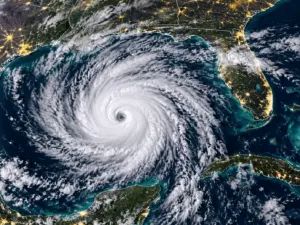

The storm slammed into Florida with winds reaching 105 mph, triggering flooding, tearing roofs off buildings and leaving a trail of destruction across Alabama and Georgia.
Hurricane Isaias left at least two people dead and caused widespread damage after making landfall along Florida’s northwestern coast Friday night (October 9). With sustained winds of approximately 105 mph, the storm struck the Destin area as a Category 2 hurricane, uprooting trees, knocking down power lines, damaging homes and flooding streets. More than 900,000 customers across Florida, Alabama and Georgia lost electricity at some point during the storm.
Florida communities face widespread damage and flooding
Pensacola was among the hardest-hit cities. Powerful winds tore part of the roof off a hotel, brought down trees and left streets blocked by fallen power lines and debris. The area’s airport also sustained damage.
In Panama City Beach, storm surge caused a significant rise in water levels, while other coastal communities reported flooding and damage to homes and businesses.
According to the National Hurricane Center (NHC), a wind gust of approximately 102 mph was recorded in Pensacola. In Panama City Beach, monitoring equipment measured water levels rising about 5.2 feet above the local high-tide reference level.
Two deaths reported as thousands of families are affected
Authorities confirmed two storm-related deaths, one in Florida and another in Alabama. In both cases, trees fell onto homes during the hurricane.
In Alabama, Mobile and communities across Houston County experienced flooding, fallen trees and road closures. Officials ordered all roads in Houston County closed because of debris and the threat of flash flooding.
Power outages also spread into Georgia. The number of affected customers fluctuated throughout the day as utility crews began working to restore service.
Isaias weakens, but flooding threats remain
After moving inland, Isaias weakened and was reclassified as a post-tropical cyclone on Saturday (October 10). Despite losing strength, the storm continued to bring heavy rainfall, strong winds and the threat of flash flooding.
Florida Governor Ron DeSantis urged residents to avoid unnecessary travel, particularly in areas where roads and highways remained flooded.
Approximately 16,000 utility workers were deployed or placed on standby to help restore damaged electrical infrastructure.
Florida and Alabama declared states of emergency to support response efforts and facilitate access to federal resources. Authorities also began assessing damage to highways, bridges and airports affected by the storm.
Hurricane reached Category 3 strength before landfall
Before reaching Florida, Isaias intensified into a Category 3 hurricane over the Gulf of Mexico, with sustained winds of approximately 120 mph.
The storm weakened as it approached the coast but still made landfall as a Category 2 hurricane, bringing dangerous storm surge, heavy rainfall and winds strong enough to cause structural damage.
The hurricane also disrupted oil and natural gas production in the Gulf of Mexico. Several companies evacuated workers from offshore platforms and temporarily suspended operations as a safety precaution.
Sources: National Hurricane Center (NOAA), Associated Press and Reuters.